Get Fast Support From Our Sales Team
Get Fast Support From Our Sales Team
Need product information, quotation, samples, or delivery details? Our sales specialists will help you select the right TFT, OLED, AMOLED, or custom display solution.

Review the datasheet. When a provider places TFT, LCD, and IPS on the very same line, each term defines a different component of the exact same display, and confusing them can send out a customer seeking an efficiency distinction that the listing never in fact specifies. What great is a panel label if the operator can’t review the screen where they stand?
A TFT LCD IPS display is an active-matrix fluid crystal display that uses thin-film transistors to resolve its subpixels and in-plane changing to control how the liquid crystals transfer light. For the purchaser, the practical factor to pick IPS is that colors and midtones normally stand up far better when the screen is watched from the side, above, or below.
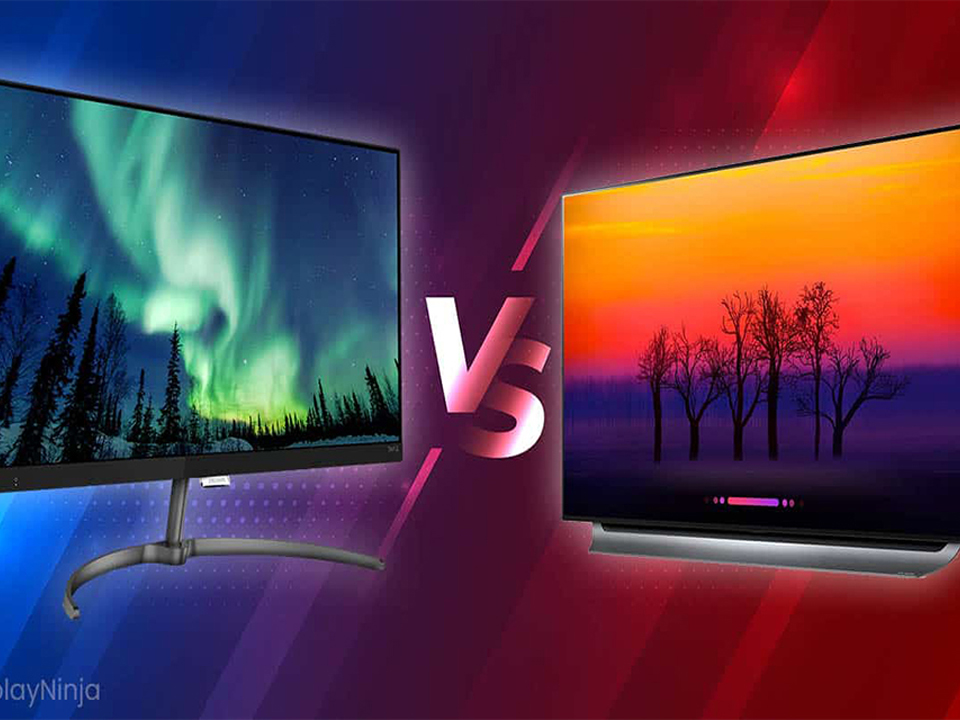
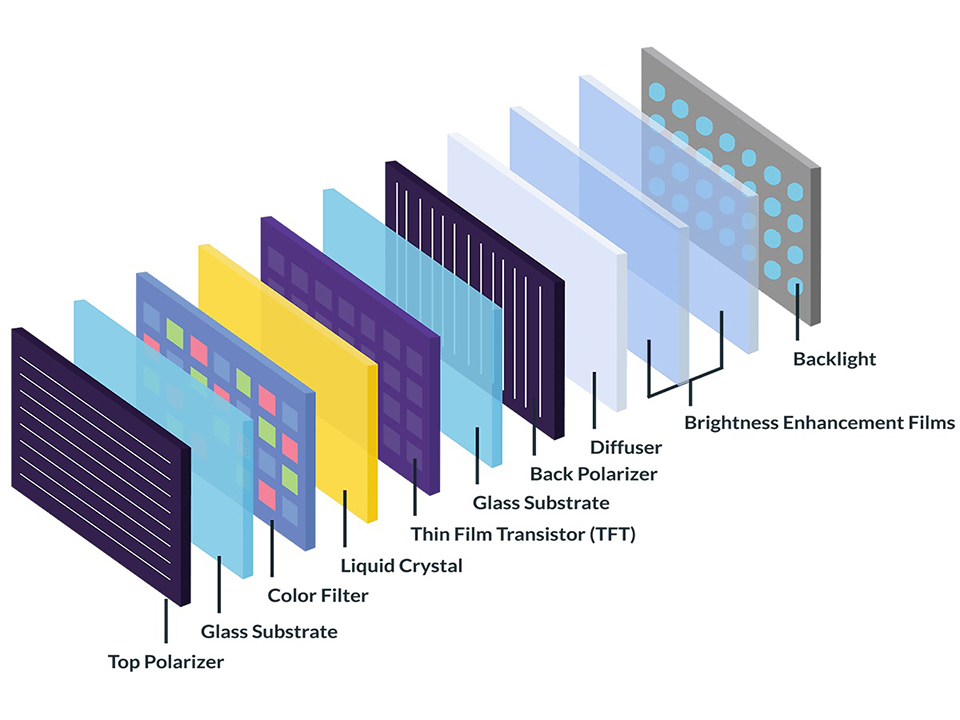
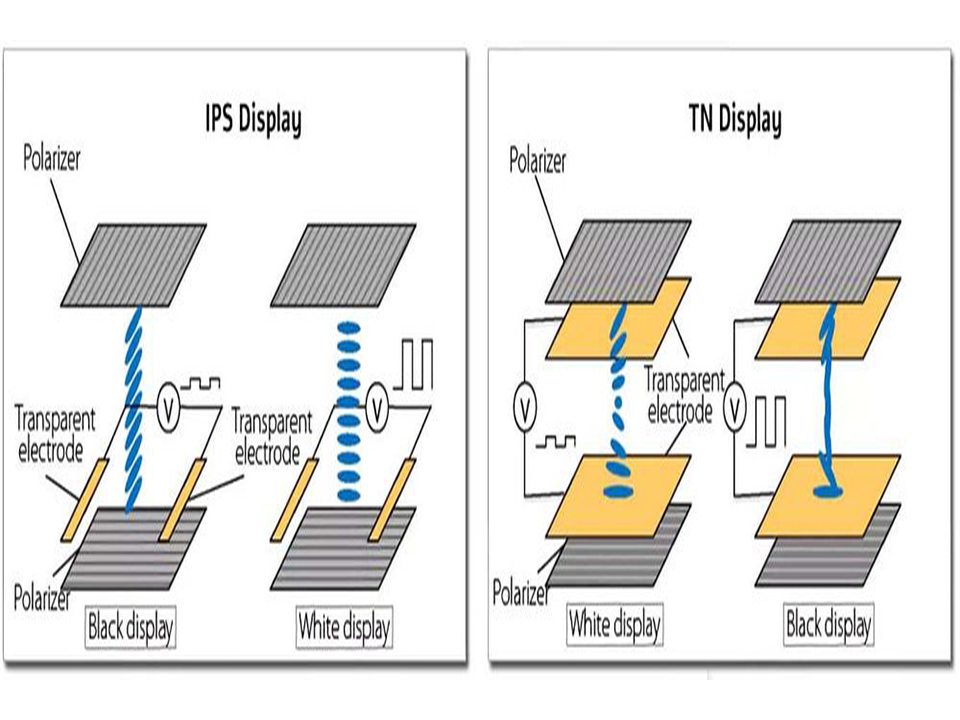
TFT represent thin-film transistor. In a typical active-matrix LCD, row and column circuits attend to the subpixels, and a transistor works as a switch so the voltage for each and every subpixel can be established and held in between refreshes. LCD mean liquid crystal display. In a backlit color LCD, fluid crystals and polarizers control how much backlight passes through the red, green, and blue subpixels. IPS stands for in-plane switching. It describes exactly how the fluid crystals reorient under an electrical area mostly alongside the panel surface area. College University London’s fluid crystal modeling group traces the reduced sensitivity to viewing angle to this side changing.
That hierarchy explains a common purchasing migraine. A listing that claims TFT LCD present tells you the display screen household and just how the pixels are addressed. The panel setting might still be IPS, twisted nematic (TN), or vertical positioning (VA). A listing that adds IPS LCD panel gives you even more info about exactly how the picture is likely to hold up off-axis. You still require different requirements for illumination, indigenous comparison, refresh rate, and color range. I would certainly request for the exact component number prior to authorizing a replacement based upon any of those labels.
A requirements of 178 ° horizontal and 178 ° vertical frequently defines the overall checking out period under a minimum contrast requirement. On a symmetrical axis, that’s approximately 89 ° on either side of straight in advance. EIZO’s viewing-angle glossary explains that LCD rankings typically make use of a 10:1 or 5:1 contrast limit. Shade can shift and fine information can end up being harder to differentiate well prior to the screen gets to that threshold. For a shared workstation or a machine-mounted display screen, I would certainly ask just how the photo checks out the real operating angle.
Take into consideration a wall-mounted control board that somebody reads from below. Put the actual user interface on the sample and show a low-contrast warning, a dim grey condition icon, and the tiniest label the driver has to review. Examine them from the expected eye position with the space lights on and the cover glass fitted. For an official acceptance test, define the horizontal and vertical angles separately, plus a minimum readable comparison or an optimum permitted shade shift. RTINGS’ vertical-angle technique illustrates why separate standards issue. It examines shade shift, color washout, and brightness loss separately.
Dell UltraSharp U4025QW. Dell announced this 40-inch-class IPS Black monitor in January 2024 and specified 5,120 × 2,160 at 120 Hz with 2,000:1 typical contrast. In its March 23 testimonial, Computer system Bild reported an average contrast of 1,179:1 for its test device. The published numbers originate from various dimension contexts, so I ‘d use the gap to ask for examination problems prior to writing a minimum into an order. Request the photo mode, white and black luminosity analyses, test pattern, and local-dimming setting. Those information make a comparison number functional.
Apple iPad Air and iPad Pro. In May 2024, the 11-inch iPad Air with M2 launched at $599 in the U.S. Apple specified a 2,360 × 1,640 LED-backlit IPS screen at 500 nits. The 11-inch iPad Pro with M4 started at $999 and used tandem OLED, which Apple rated at 1,000 nits full-screen and 1,600 nits top for HDR. Associated Press likewise reported the move to twin OLED panels. The prices put on finish tools with various equipment. The screen numbers illustrate why a full-screen brightness ranking and a height HDR ranking belong in different fields on a comparison sheet.
VESA DisplayHDR 1.2. On May 7, 2024, the Video Clip Electronics Criteria Organization said that greater than 3,000 screen versions had actually been certified under the DisplayHDR program by that point. Variation 1.2 presented examinations for color accuracy, comparison, black levels, and caption flicker. It also transformed the white-luminance examination from a 10% patch on a black background to an 8% spot on a non-black background. That change matters if your display will certainly show HDR video clip together with a modifying timeline or desktop computer. I ‘d tape-record the accreditation variation and rate with each other. User interface Requirements for The Display Market
Beginning with the precise panel or component number, consisting of the suffix and alteration. Seek IPS or in-plane changing in the supplier’s datasheet. For a completed monitor, check the specification for the precise design and local version. For an ingrained TFT LCD, ask the vendor to recognize the accepted panel and document any kind of alternative. A matching diagonal, resolution, and connector can still leave you with different pin jobs, timing, or backlight demands.
With a sample in hand, bring up a grayscale ramp and view it from over and listed below at a fixed illumination. A solid tonal inversion from listed below factors towards TN. Reasonably steady midtones follow IPS, although the precise component number stays the much better recognition method. For dark user interfaces, repeat the get in touch with a black photo. An edge haze that alters as you relocate your head is consistent with IPS radiance. A brilliant spot that hugs the same edge as you move is a lot more constant with backlight hemorrhage.
My acceptance criteria would depend on the work. For a screen installed behind a shiny cover, I ‘d define readability under the expected ambient light. For color evaluation, I ‘d request measured gamut protection and shade mistake in the desired mode, together with uniformity across the display. For motion, I ‘d check several gray-to-gray changes at the refresh price and overdrive setting we mean to utilize. A single response-time figure can conceal slow shifts or noticeable overshoot.

An IPS LCD manages light from a backlight. An OLED pixel produces light with a natural emissive layer. That offers OLED direct control over which pixels send out light, while a mini-LED IPS LCD can lower teams of backlight LEDs behind the liquid crystal panel. I ‘d review the finished display for the designated web content. Dark video, an all-day fixed control panel, and a head-mounted screen put very different demands on the equipment. Division of Power
For near-eye layouts, Hicenda’s 0.71-inch 1,920 × 1,080 AMOLED microdisplay for AR/VR and 0.23-inch 640 × 400 OLED microdisplay illustrate 2 various panel layouts. Start with the optical assembly, then check energetic location, the field of vision via the optics, and the luminosity that reaches the eye. If you’re prototyping with the HG039FH8A0 0.39-inch OLED microdisplay with a Type-C board, ask which video clip method the board approves and what the set includes. Hicenda Present
For a compact standing interface, the HG-075-9696TSWKG03 0.75-inch SPI/I ² C OLED component increases a various set of inquiries. Verify the supported bus setting, pinout, controller, and initialization series prior to setting out the board. The supplied WordPress pages were not available throughout verification, so the product summaries right here utilize details affirmed by Hicenda’s parallel brochure listings. Request for the existing part-specific datasheet before designing about any of these components.
| Show type | Regular stamina | What to check on the actual sample |
|---|---|---|
| IPS LCD | Extra consistent shade and midtones across viewing placements | Off-axis color change, dark-screen glow, and indigenous comparison |
| TN LCD | Rapid transitions on versions developed for affordable video gaming | Vertical tonal change, change times, and overshoot |
| VA LCD | Higher native comparison and deeper blacks in numerous LCD checks | Dark-transition denigration and off-axis gamma shift |
| OLED | Pixel-level light control and deep blacks in dark scenes | Continual illumination, static-content behavior, and reflections |
Utilize the panel family members to tighten the shortlist. After that compare actual dimensions under the very same conditions. For a monitor made use of across a shared workdesk, I ‘d offer off-axis readability a lot more weight than a headline reaction time. For a screen used straight on in a dark room, I would certainly give black luminance and dark changes a lot more weight.
A TFT LCD IPS display screen is an active-matrix fluid crystal screen in which thin-film transistors deal with specific subpixels and an in-plane electrical field reorients the fluid crystals, managing how much backlight travels through the panel and aiding the picture retain its color and tone throughout larger viewing angles.
A TFT LCD is an active-matrix liquid crystal screen whose subpixels are attended to by thin-film transistors, while IPS is a liquid crystal switching mode, so one panel can carry both tags and the broader TFT LCD category additionally includes panels that utilize TN or VA switching.
An IPS screen is a screen whose precise panel or module requirements determines in-plane changing as its fluid crystal mode, with fairly stable color and grey tones off-axis serving as sensible ideas when a datasheet is unavailable and the screen can be examined in person.
IPS is typically the very best LCD panel kind for broad watching angles because its in-plane switching layout often tends to protect color and midtone information when individuals take a look at the screen from the side, above, or below, with the useful angle still depending on the specific panel and application.
An IPS display is a liquid crystal display that creates a picture by controlling transmitted light from a backlight, while an OLED display uses organic light-emitting aspects to produce light at the pixel level, enabling private pixels to turn off in the dark areas of a picture.
Give the supplier your target diagonal, resolution, interface, placing positioning, viewing range, ambient lights, and running temperature. Request the exact panel alteration, a datasheet, and a sample you can check in the room. Prior to authorizing an IPS display, place your genuine user interface on it and read it from the hardest viewing position your users will face.
Leave Your Comments