Get Fast Support From Our Sales Team
Get Fast Support From Our Sales Team
Need product information, quotation, samples, or delivery details? Our sales specialists will help you select the right TFT, OLED, AMOLED, or custom display solution.

Sunlight adjustments every little thing. An auto display screen that festinates on a vendor’s bench can shed its tiniest warning icons once the production cover glass takes place, the device is tilted into the dashboard, and light from the side window reaches the vehicle driver’s eyes by way of the display. Exactly what did the bench examination confirm?
The basic requirements are legible details, prompt updates, and secure operation across the car’s lights, temperature level, and power conditions. Just how you determine those needs depends on the display’s job. A collection has to reveal speed and telltales at startup. A facility screen may have to switch over from a map to a real-time rearview image. A guest screen has a different set of viewing settings and content priorities. I ‘d place those tasks in the very first column of the specification, prior to screen dimension or optimal illumination.
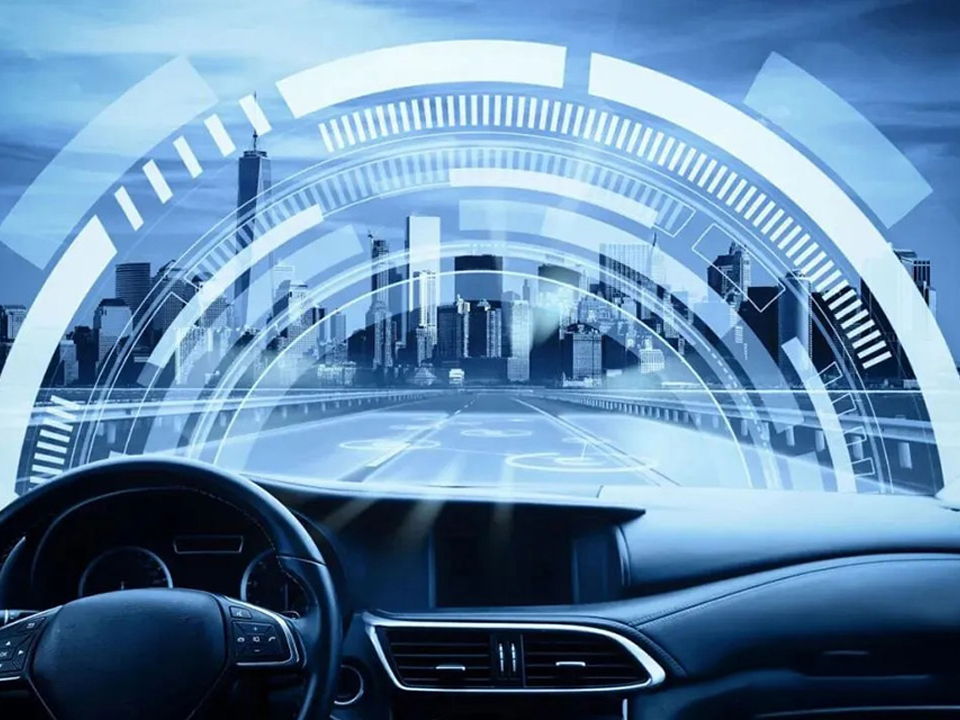
Start with the info the resident requires, the placement they’ll review it from, and the event that makes it required. For a cluster, that might be a turn-signal sign or a warning at start-up. For a car infotainment screen that likewise lugs video camera video, it might be the initial useful rearview framework after the chauffeur selects Reverse. For a portable auxiliary screen, it might be a two-digit worth that needs to remain legible at an uncomfortable installing angle.
I would certainly compose each need so someone outside the job could duplicate the examination. “Wide viewing angle” leaves room for disagreement. “The driver can check out the tiniest needed warning at the specified eye settings, with the production lens mounted and the prescribed light event on the display screen” gives the team a problem it can recreate. Include a quantifiable threshold, the software application develop, and the temperature variety, and the outcome becomes helpful when something adjustments late in the program.
ISO 15008:2017 specifies image-quality and clarity demands for sure vibrant info provided to passenger-car drivers while the lorry is relocating. Its extent leaves out photographic rearview images and head-up screens. For a screen that holds several functions, determine the requirements and test approach for each one.
The vehicle display comparison proportion estimated on a datasheet may come from white and black measurements in a dark space. When cabin light shows off the display, both analyses can climb. The black reading matters overmuch. A dark icon history that looks nearly black inside can become a gray patch in the auto, taking the edge of a slim icon with it.
Right here’s the arithmetic. Assume the screen releases 800 cd/m ² for white and 0.8 cd/m ² for black. At night, that provides 1,000:1. Include an illustratory 80 cd/m two of shown luminance to every reading and the observed proportion falls to about 10.9:1. At 20 cd/m ² of shown luminosity, it has to do with 39.4:1 with the same given off brightness. Genuine reflections depend upon the surface, the light source, and the viewing geometry. The instance shows why I request the reflected-light readings prior to accepting a brighter backlight.
An automobile display checking out angle also requires a pass requirement. Record the horizontal and upright watching settings, then check illumination, contrast, shade, and the readability of actual web content at each one. On a center screen, consist of both front seats if both are desired individuals. Revolve depictive polarized sunglasses via realistic head angles and check whether a called for icon lowers or disappears. A bare component can aid display candidates early, consisting of a 2.31-inch RGB TFT LCD with an ILI9342 vehicle driver. Final dimensions belong to the set up assembly.

Establish the geometry initially. Mount the production display, lens, and bordering trim at the designated control panel angle. Place the luminosity meter at the driver’s eye placement, then repeat beside the range the driver’s eyes can inhabit. Illuminate the assembly from the pertinent instructions and videotape the light level at the display in lux. The meter checks out the screen in cd/m TWO. Keep both worths in the report so the arrangement can be duplicated.
Action the picture individuals need to read. Record white, black, and ambient contrast at each placement, after that put up the smallest required message and symbols. Include a warning at the screen edge and, where appropriate, a camera overlay. Photograph any type of representation that crosses the material. A single full-screen white reading can hide the specific place where the side window reflects into the driver’s line of vision.
Repeat the examination after a warm soak and in darkness. Inspect whether the system can endure its daytime luminosity once the display screen is hot and thermal limits work. After that determine the usable reduced end of the dimming array and see the transition in between bright and dark conditions. SAE J1757/1 _ 202108 explains optical measurement techniques for automobile ambient lighting. Specify the task’s pass standards alongside the approach and record the polarized-eyewear check individually.

A temperature array needs an operating meaning. If a project specifies − 40 ° C to +85 ° C, ask which temperature level the limitations describe, how much time the device is saturated, and which works must operate at each end. At the cool extreme, record time to the initial readable frame and examine whether altering numbers leave a noticeable path. At the warm extreme, check sustained luminosity, harmony, and any kind of dimming driven by thermal protection. A backlight summary, such as the one for a 2.7-inch RGB TFT LCD with a white LED backlight, is a starting point for asking about drive present, warm, and luminosity maintenance.
Run the very same optical checks after the concurred aging and environmental examinations. Check the lens and bond for haze, bubbles, or splitting up. Check the connector and placing after resonance, and assess any kind of recurring habits on video clip or in the logs. I would certainly ask the distributor to report the minimum retained luminosity and the examination problems. A backlight lifetime number by itself leaves open how understandable the assembled screen will certainly be at the end of that examination.
On a small screen, user interface and layout selections affect what the host can supply. A 2.4-inch SPI TFT LCD with an ST7789V chauffeur is a beginning point for inspecting how much time real screen updates take over SPI. A 2.36-inch RGB TFT LCD module with an OTA5182 motorist raises a different set of timing and pinout questions. For a 2.45-inch 240 × 430 color TFT LCD, I ‘d simulated up the tiniest label at the actual installation range before authorizing the format. Confirm the specific part revision and application credentials with the distributor.

Ford and Lincoln, 2023– follow the picture back to the video camera. In NHTSA project 23V-342, Ford checked out blue or empty rearview images impacting vehicles consisting of the Ford Traveler, Lincoln Pilot, and Lincoln Corsair. Its amended chronology recorded 250 guarantee reports affirming rear-camera blue photos or complete blue or black screens after an earlier repair work, since March 21, 2023. By July– August, Ford and its provider had figured out that camera hardware contributed to the condition. I would certainly make use of that situation to warrant logging video clip at several factors in the chain. The chauffeur sees a poor image at the display, yet the fault can begin upstream.
Tesla Cybertruck, September 2024– time the initial functional framework. Tesla’s Component 573 record for NHTSA project 24V-718 listed 27,185 possibly involved 2024 Cybertrucks. Under certain closure and reactivate problems, the rearview display screen might stay blank for six to 8 seconds after the motorist shifted to Turn around. The relevant FMVSS No. 111 test called for the rearview picture within 2.0 secs of the start of a backing event. A warmed-up system can cruise via a timing trial. Place the shutdown-to-restart change in the examination manuscript.
Kia EV9, October 2024– rerun cluster checks after software application updates. Kia’s filing for NHTSA campaign 24V-757 noted 14,163 potentially involved automobiles across version years 2024 and 2025. A software reasoning mistake might periodically empty the tool collection at startup, hiding details such as rate and turn-signal indicators. Kia traced the concern to an August 2024 over-the-air update. I would certainly call for startup and warning regression results for every single launch that changes cluster initialization or automobile wake-up actions.
| Demand | Measure on the installed display screen | Evidence to keep |
|---|---|---|
| Daylight readability | Ambient comparison and readability of the tiniest needed text under specified lights | White and black analyses, lux, light geometry, photos of worst-case representations |
| Evening readability | Minimum functional luminance, dimming behavior, and noticeable representations | Low-light analyses, lowering settings, photos from the motorist’s eye position |
| Watching angle | Comparison, shade, and symbol acknowledgment across the designated eye placements | Angle or eye-position map, results with polarized eyewear where tested |
| Image timing | Time from the setting off event to the initial proper, useful framework | Integrated timestamps or video clip, software program develop, worst observed outcome |
| Temperature level and aging | Cold response, sustained hot brightness, and retained optical performance | Saturate conditions, before-and-after analyses, example and part modification |
| Power and software program recovery | Habits throughout start-up, rest, wake, cut off power, and updates | Event logs, cycle matter, short-term problems, and any blank or stale frames |
| Touch, where equipped | Input accuracy and feedback under defined cabin and usage conditions | Test grid, ecological conditions, missed and unintentional inputs |

The fundamental demands for a cars and truck display screen are legible details in daytime and darkness, enough contrast at the designated watching placements, prompt discussion of called for photos or warnings, and steady procedure across the vehicle’s defined temperature level, resonance, power, and service-life problems. A touch-enabled display screen likewise requires input precision and response requirements under its specific problems of usage.
The best brightness for a vehicle display screen is the luminance range that keeps its necessary content readable from the designated seats in daytime conditions, lowers completely for evening driving, and can be suffered at operating temperature with the production cover lens and trim installed. Ask for daytime and nighttime outcomes alongside the peak-nit figure.
Evaluating vehicle display readability in sunshine means measuring the installed screen’s white and black luminance from the desired eye positions under controlled lighting, then inspecting whether the tiniest called for text and icons remain clear when representations, placing angle, and the display’s daytime brightness setup are present. Record light direction and illuminance so one more team can duplicate the outcome.
A great automobile display contrast ratio is one that preserves legibility for the needed text, icons, or electronic camera overlays at the defined watching positions and ambient light degrees, with the manufacturing optical pile in place and the display performing at the brightness it can sustain under those problems. Contrast vendor figures only when the examination geometry, light level, and show settings are equal.
Send Hicenda the active location, host user interface, dashboard angle, cover-lens layout, operating temperature level variety, and the smallest text or icon the owner needs to read. If the display lugs video camera video clip or advising indicators, include the event that causes the image and the moment allowed to show it. Request the precise component revision, a complete datasheet, and example systems you can determine behind your manufacturing lens. Bring the resulting daytime, evening, and start-up dimensions to the design evaluation prior to dedicating to tooling.
Leave Your Comments