Get Fast Support From Our Sales Team
Get Fast Support From Our Sales Team
Need product information, quotation, samples, or delivery details? Our sales specialists will help you select the right TFT, OLED, AMOLED, or custom display solution.

Tags hide tradeoffs. When a supplier calls a display an HD TFT screen, it tells you something concerning the pixel grid and how the panel is driven, while leaving the watching angle, reflection, operating power, and also the specific native resolution to the datasheet. Which of those would you wish to discover after reducing the tooling?
An HD TFT display is normally an active-matrix LCD with an HD-class indigenous resolution, frequently 1280 × 720 when the listing means 720p. TFT represent thin-film transistor. In a standard TFT LCD, transistors control the subpixels, and the fluid crystal layer controls how much light from the backlight passes through. Full HD methods 1920 × 1080. In a quote, examine the native grid in numbers. Sellers often make use of “HD” for panels such as 1366 × 768, as well.
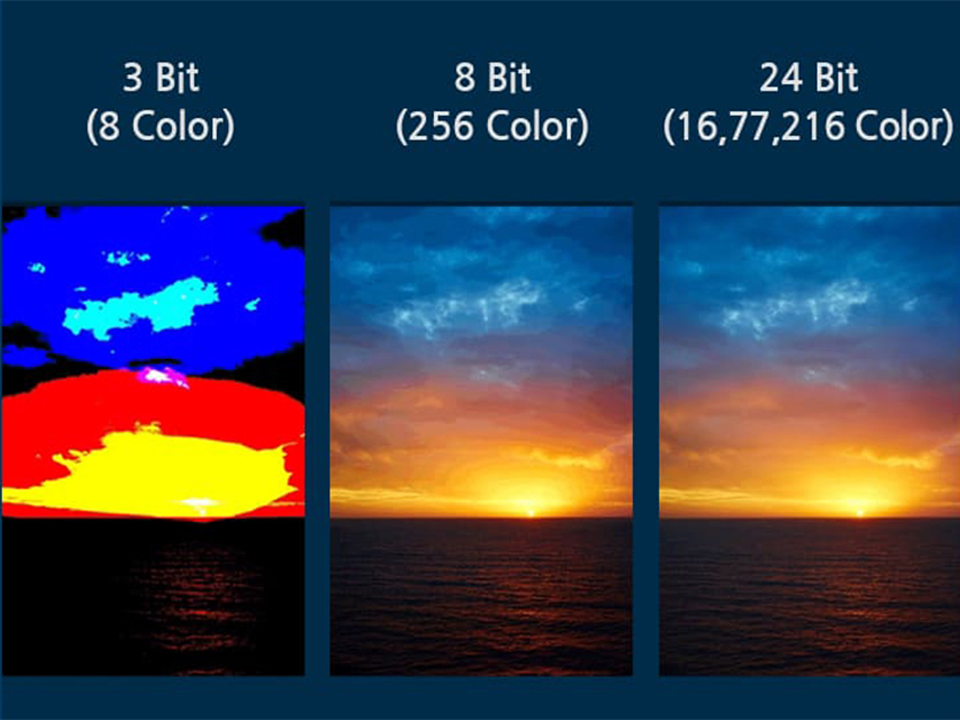
The display screen controller sends picture data to row and column drivers. As each row is selected, its thin-film transistors allow the column drivers bill the individual subpixels to the needed voltages. A storage capacitor assists hold the voltage in between refreshes. The resulting electrical field alters the orientation of the fluid crystals, which changes how much backlight passes through the polarizers. Red, eco-friendly, and blue color filters offer the subpixels their color.
The backlight and touch controller can have their own connectors, voltages, and start-up requirements. I request for the module drawing and electric spec with each other. A panel can fit the cutout and still need a various board.
A 1280 × 720 panel has 921,600 pixels. A 1920 × 1080 panel has 2,073,600, or 2.25 times as many. On two 7-inch, 16:9 panels, that works out to roughly 210 versus 315 pixels per inch. At the same physical text size, the Full HD panel can use a lot more pixels to attract each letter. At the exact same typeface dimension in pixels, nevertheless, letters on the denser panel will certainly be physically smaller sized.
There’s a hardware expense, also. One securely packed RGB888 frame takes 2.76 MB at HD and 6.22 Megabytes at Full HD, in decimal units. At 60 Hz and 24 little bits per pixel, the active picture alone represents about 1.33 Gbit/s and 2.99 Gbit/s, respectively. Make use of the panel timing and link specifications to budget blanking and transport expenses. Check that the host can maintain the refresh rate under load.
I ‘d spend for added pixels if they make a jampacked waveform or a multilingual food selection less complicated to check out at the working range. A standing screen with two buttons might profit much more from a low-reflection cover.
Twisted nematic (TN) and in-plane changing (IPS) describe how the liquid crystals reply to an electrical area. Both can utilize a TFT backplane. IPS generally preserves shade and tonal information better when seen from the side or from above and below. TN can benefit a taken care of, straight-on viewing placement.
The number I question initial is a watching angle quoted at a 10:1 contrast ratio. It informs you where black and white meet a comparison limit under the provider’s conditions. Can a driver still identify two grey levels or identify a brownish-yellow alarm there? Show a grayscale ramp, tiny kind, and the real warning colors. Inspect from above and below, too.
Present brightness is reported in cd/m ², likewise called nits, under mentioned conditions. Readability in brilliant ambient light additionally relies on the light shown by the cover, touch pile, and panel. In a simplified instance, a display screen with a 500 cd/m ² white level and a 1 cd/m two black degree has a 500:1 comparison proportion in darkness. Add 10 cd/m ² of reflected light to both measurements and the proportion falls to regarding 46:1. Include 50 cd/m two and it is up to regarding 11:1.
In June 2024, Tianma scientists reporting in the SID Seminar Digest of Technical Documents explained a 12.3-inch automobile LCD model that reached 0.8% reflectance via antireflective therapy and adjustments to the shielding-layer product. Ask whether the distributor measured the bare panel or the module with its cover glass and touch sensing unit installed.
Power varies also at the same size and resolution. In its December 2024 guide Getting Energy-saving Displays and Monitors, the United State Division of Energy contrasted 27-inch 1080p LCD keeps track of at 29, 52, and 72 kWh annually. Under federal getting assumptions, that 43 kWh annual spread converted to a $16 lifetime energy-cost distinction. For an embedded item, action watts at your called for luminosity, after that check the power and temperature level of the assembled device.

A TFT LCD utilizes a backlight. An OLED produces light in its organic sending out layers, and an AMOLED utilizes an active-matrix backplane to drive its pixels. OLED power depends upon the picture. Contrast power with your real web content at the called for luminance.
Omdia’s Smart device Present Market Tracker reported 182 million AMOLED panels and 172 million TFT LCD panels shipped for mobile phones in the initial quarter of 2024, up 39% and down 10% year over year, specifically. For a controller you’ll support for five years, I ‘d place even more weight on the part’s lifecycle status and the provider’s substitution policy.
In near-eye optics, a 0.71-inch Full HD AMOLED microdisplay for AR/VR packs 1920 × 1080 pixels into a portion of an inch. Hicenda’s 0.5-inch HGECX337RF AMOLED microdisplay has 1280 × 960 pixels and a 4:3 facet ratio. The 0.23-inch HGECX336AF OLED microdisplay uses 640 × 400. For an eyepiece, evaluate pixels per level via the designated optics. I confirmed the sizes and resolutions versus Hicenda’s directory. The supplied WordPress web pages were inaccessible for a direct check.

Beginning with the tiniest thing users have to read, even if it’s a decimal factor. Check it at the farthest functioning range and worst seeing angle, with the production cover mounted and the backlight readied to its operating restriction. I would certainly specify a passing outcome prior to the samples arrive.
Check whether your host supports the component’s MIPI DSI, LVDS, or identical RGB arrangement. Request the exact timing, information mapping, adapter pinout, supply rails, backlight current, and start-up series for the priced quote alteration. Get a device rate at your build amount and ask just how much notification you’ll obtain if the component modifications.
| Choice | What the specification informs you | What to verify |
|---|---|---|
| HD, 1280 × 720 | 921,600 native pixels at 16:9 | Tiniest type and signs at the functioning range |
| Complete HD, 1920 × 1080 | 2,073,600 indigenous pixels at 16:9 | UI scaling, frame-buffer clearance, and secure refresh |
| TN TFT LCD | Twisted nematic liquid crystal setting | Grayscale and color at the worst upright angle |
| IPS TFT LCD | In-plane changing fluid crystal mode | Off-axis clarity and comparison via the last cover |
| AMOLED microdisplay | Self-emissive OLED with an energetic matrix | Image sharpness and effective field of view with the optics |

An HD TFT display is an active-matrix fluid crystal display with a high-definition pixel grid, commonly 1280 × 720, in which thin-film transistors regulate specific subpixels and a backlight provides the light that the fluid crystals manage to create the photo. Validate the native pixel measurements prior to ordering.
The distinction between HD and Full HD TFT screens is their native pixel count, with basic 720p HD at 1280 × 720 pixels and Complete HD at 1920 × 1080 pixels, providing Full HD 2.25 times as lots of pixels at the very same 16:9 facet ratio. At the exact same diagonal, Full HD offers 50% even more pixels per inch.
An IPS TFT display is an active-matrix LCD that makes use of thin-film transistors to address its subpixels and in-plane switching to manage the fluid crystals, a plan that normally maintains shade and grayscale detail throughout wider watching angles than a twisted nematic panel. Panel-specific test results issue when numerous individuals need to check out the same display.
The most effective resolution for a TFT display screen is the lowest indigenous pixel count that makes the required message, graphics, and manages legibly at the desired display size and checking out distance while remaining within the item’s rendering, memory, interface data transfer, and power budgets. Validate that selection with manufacturing content on a sample.
Send out distributors the same quick with your screen dimension, prospect resolutions, interface, minimum luminance, installing angle, illumination problems, and annual quantity. Request a sample, the existing datasheet revision, and a quote for the specific part. Test the samples with the exact same UI at the very same physical text dimension before accepting a manufacturing order.
Leave Your Comments