Get Fast Support From Our Sales Team
Get Fast Support From Our Sales Team
Need product information, quotation, samples, or delivery details? Our sales specialists will help you select the right TFT, OLED, AMOLED, or custom display solution.

The pixels matter. When a display screen buyer deals with OLED, AMOLED and PMOLED as three comparable access on a quote sheet, the conversation skips the engineering decision that determines whether the panel can show the desired user interface at the needed brightness, power draw and life span. Exactly what is the supplier asking you to contrast?
OLED represents natural light-emitting diode. AMOLED and PMOLED are 2 methods to attend to OLED pixels.
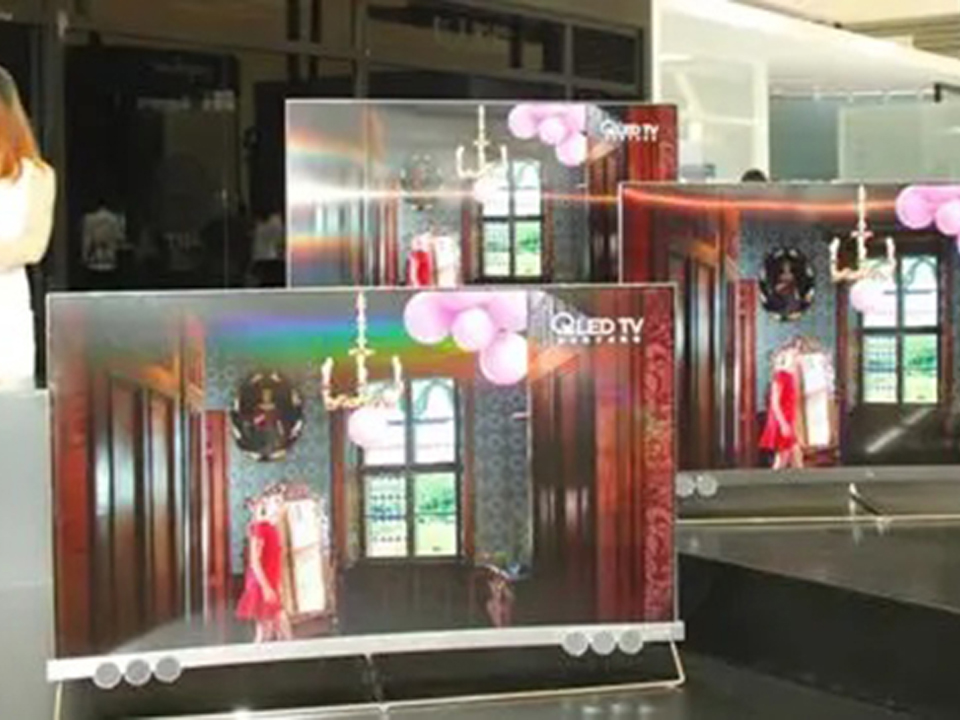
An OLED has slim organic semiconductor layers in between an anode and a cathode. Under electrical bias, the electrodes inject holes and electrons. When they recombine, the resulting excited state can launch energy as a photon. A display screen uses this process in independently regulated pixels or subpixels, so the image itself is the light source.
Drive a pixel to black and it can emit nearly no light, which provides OLED exceptional dark-room contrast. Outdoors, a shiny cover can reflect enough light to make black look gray. I would examine the panel behind the manufacturing cover at the angles the user will in fact see.
OLED power additionally relies on the picture. A black user interface with a few white numbers and an all-white analysis screen can draw different amounts of present at the same brightness setup. Step both at the component input, with any exterior converter included if it sits inside your display screen power budget. The most beautiful trial display can skew your battery quote.
AMOLED vs OLED is a contrast in between a particular pixel-drive approach and the more comprehensive display screen household. In an active-matrix OLED, a backplane of thin-film transistors programs each subpixel. A storage space capacitor normally holds the configured control voltage between updates, and a drive transistor controls the OLED current. The panel still receives new image information row by row, while programmed pixels can give off in between addressing occasions, based on the panel’s discharge timing.
AMOLED vs PMOLED is a comparison of 2 drive methods. A passive-matrix OLED chooses rows in succession and drives the columns that should discharge on the selected row. With 48 scanned rows at 60 frames per 2nd, the idealized row port is about 0.35 nanoseconds prior to timing overhead. Add rows at the exact same framework rate and each slot shrinks. Fulfilling the exact same typical luminosity can then need higher peak pixel drive, which affects the existing spending plan and can place more tension on the emitters.
For PMOLED, I begin with the host bus, noticeable window and controller RAM mapping. For a high-resolution AMOLED, I additionally examine display screen data transfer, rejuvenate settings and whether the host can maintain producing structures while the remainder of the system is active.
Smart device deliveries. In its June 24, 2024 Mobile Phone Show Market Tracker release, Omdia reported that 182 million AMOLED smart device panels delivered in the initial quarter of 2024, up 39% year over year. TFT LCD smartphone panels totaled 172 million, down 10%. It was the very first quarterly crossover in Omdia’s tracker. Utilize those numbers to assess mobile phone panel supply. For a five-year commercial design, ask for a commitment on the precise component.
Tandem OLED at retail. On Might 7, 2024, Apple revealed the 11-inch and 13-inch M4 iPad Pro. Its Ultra Retina XDR show consolidated light from 2 OLED emissive heaps, with Apple defining 1,000 nits full-screen in SDR and HDR and 1,600 nits height in HDR. The Wi-Fi models began at $999 and $1,299 in the United States. If a quote promotes a four-digit brightness number, ask the vendor to state the bright area, duration and thermal problems. Apple’s two illumination figures describe distinct workloads on the same device.
Deep-blue emitter study. In the October 15, 2024 concern of Advanced Useful Materials, Guijie Li and associates reported 71 hours to 90% of preliminary luminance for an experimental deep-blue OLED utilizing a platinum(II) emitter called PtON5N-dtb. Initial luminosity was 1,134 cd/m ². The scientists estimated 85 hours to the same threshold at 1,000 cd/m ² and reported an eightfold renovation over their contrast emitter in the same gadget setting. The eightfold gain is a contrast between speculative emitters. For a completed module, request its own luminance-decay information at your operating illumination.
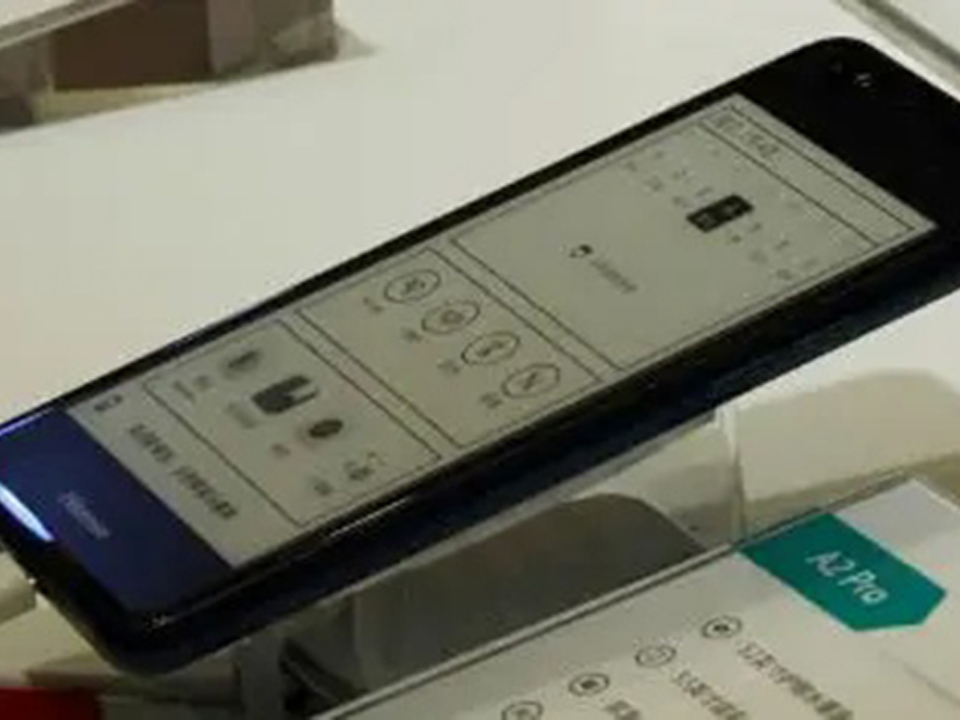
For a narrow battery indicator or a two-line instrument readout, start by setting out the longest text string and the tiniest icon at indigenous resolution. The 0.5-inch 48 × 88 monochrome OLED with a CH1115 controller is a prospect for a slim opening. Inspect which border the flex exits, how the active area rests behind the bezel and which bus the details component reveals.
For a larger icon row and brief message, consider the 0.66-inch 64 × 48 HG-066-6448KSWEG03 PMOLED component. Hicenda’s magazine determines an SSD1306 chauffeur and a 1/48 drive responsibility for that design. When raising a sample, present a boundary, mark all four corners and cycle a checkerboard. That reveals column offsets, positioning errors and clipped rows.
For a touchscreen revealing menus, charts and relocating graphics, qualify the full display screen assembly. The 5.08-inch 720 × 720 square IPS LCD with on-cell touch is a valuable comparison when the room needs a square touch surface area. For a brilliant fixed user interface, the 3.5-inch Full HD TH035FHD-B401M TFT LCD rated at 1,350 nits offers you a backlit recommendation. Contrast both behind the production cover under the exact same illumination.
I ‘d test the most common display at target luminance, after that run the brightest reasonable screen till the panel gets to a steady temperature. Keep an always-on screen with set signs for the aging examination. Log input power and luminance. Ask the distributor for minimal guaranteed luminance, lifetime test conditions and the exact part modification.
| Design inquiry | OLED | AMOLED | PMOLED |
|---|---|---|---|
| What does the term describe? | Organic light-emitting screen family members | OLED with an active-matrix backplane | OLED with easy row-and-column addressing |
| How are pixels driven? | Depends on the attending to style | TFT wiring preserves the configured drive in between row updates | The controller scans rows and drives columns during each row slot |
| What is it a good fit for? | Applications that benefit from self-emissive pixels | Thick color interfaces, smart devices and computer animated displays | Small monochrome condition screens, symbols and brief message |
| What changes power draw? | Lit location, luminosity, shade and drive electronics | Photo web content, panel setups and rejuvenate actions | Lit dots, scan obligation, drive existing and controller overhead |
| What would I examine first? | Precise component and dimension problems | Host transmission capacity, sustained luminosity and power limits | Alignment, RAM mapping, pinout and height current |
An OLED display makes an image by sending out present via slim layers of natural semiconductor material, where electrons and holes can combine and produce light, with the display’s drive wiring managing which pixels or subpixels give off and how intense they show up throughout each structure.
AMOLED is an OLED display screen that utilizes active-matrix transistor circuitry to control its pixels, making it a strong fit for high-resolution shade and motion, while the wider OLED tag tells you just how the display screen generates light and leaves the pixel-addressing approach to the version spec.
PMOLED is normally the initial OLED type to examine for a tv that reveals sporadic grayscale message or standing symbols, while AMOLED is usually the far better fit when an in a similar way tv must deal with thick graphics, frequent updates, smooth animation or a full-color touch interface.
OLED power intake is the electric load of the light-emitting pixels and their drive electronics, and whether it drops below an LCD’s relies on the photo, the target luminosity and the two components’ electronics, with dark, sporadic web content normally preferring the OLED’s ability to turn specific pixels off.
OLED burn-in is a consistent difference in pixel brightness or shade triggered by irregular aging of the emitters, typically when repaired graphics such as logos, status bars or instrument scales continuously drive the same pixels harder than the pixels around them over the device’s operating life.
Send Hicenda your unit opening, target luminance, present interface, annual volume and a screenshot of the most requiring display. Request the existing datasheet, mechanical illustration, initialization sequence and an example connected to the estimated part number. If you’re selecting between two panels, request both and run the very same UI on each prior to approving the layout.
Leave Your Comments